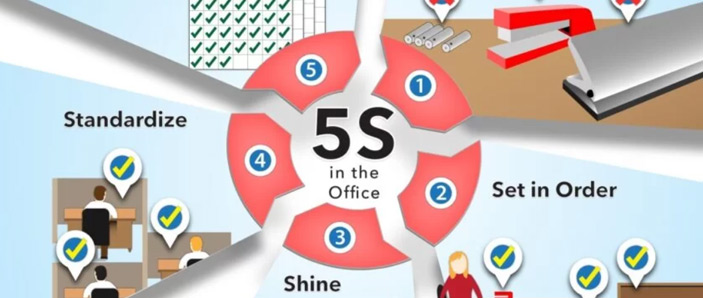
5S is a methodology used to organize and maintain a clean, efficient, and safe work environment. It originated in Japan and is widely applied in various industries worldwide. The goal of 5S is to improve workplace productivity, quality, safety, and employee morale by creating a well-organized and clutter-free workspace. The 5S principles are as follows:
- Sort (Seiri): The first step is to sort and separate items in the workplace into necessary and unnecessary categories. Unnecessary items, tools, equipment, or materials that are not needed for daily operations should be identified and removed from the workspace. This helps eliminate clutter and create more space for essential items.
- Set in Order (Seiton): Once unnecessary items are removed, the next step is to organize and arrange the remaining items in a logical manner. Each item should have a designated place, and tools and equipment should be properly labeled and stored for easy access. The aim is to optimize workflow and minimize time spent searching for items.
- Shine (Seiso): In this step, the focus is on cleaning and maintaining a clean workspace. Regular cleaning routines are established to ensure that work areas, tools, and equipment are kept clean and in good condition. Cleaning not only enhances the visual appeal of the workspace but also helps identify and address maintenance or safety issues.
- Standardize (Seiketsu): Standardization involves establishing clear guidelines, procedures, and visual controls to ensure consistency and uniformity in the workplace. Standardized processes and work instructions are implemented to promote efficiency, reduce errors, and facilitate training and cross-functional collaboration. Visual cues, such as color coding or signage, can be used to communicate information effectively.
- Sustain (Shitsuke): The final step is to sustain the improvements achieved through the previous 4S steps. Sustaining the 5S practices involves creating a culture of continuous improvement and maintaining discipline in adhering to the established standards. Regular audits, employee engagement, and ongoing training are essential to ensure that the 5S principles become ingrained in the organization's culture.
The benefits of implementing 5S include